大学现代英语精读2?大学英语精读第二册 答案 1PRa-QLF4KdnIyb3JvjEXCw y90x 如果资源不正确,或者版本不正确,那么,大学现代英语精读2?一起来了解一下吧。
本教材有以下特点: 1. 本教材是北京外国语大学英语系的一项重要科研成果,汇集了英语教学专家们的丰富教学经验,体现了前沿的教学思想。 2. 教材吸纳了国外最新的语言材料,题材丰富,内容新颖,包括了现代生活的各个方面,具有鲜明的时代特征。 3. 教材在总体目标、语言项目、词汇范围和练习方式上,都体现了新大纲的要求,符合国家标准。 4. 教材在教学法上博采众长,不拘一格;在教学原则上注意发挥学生的主动性与积极性;在编写手法上注意纵向连贯和横向配合,循序渐进。 5.与教材配套的有录音带、多媒体软件等辅助学习材料,体现了立体教学的特点,方便读者学习。 6.教材注意语言与文化的结合,注重提高学生的人文修养,体现了英语专业教材的特色。
Acknowledgement
Abbreviations
Texts
Lesson One
Text A Another School Year—What For?
Text B The Thought Card
Lesson Two
Text A Maheegun My Brother
Text B The Land of the Lock
Lesson Four
Text A The Nightingale and the Rose
Text B Nightingale
Lesson Five
Text A Say Yes
Text B Arrangement in Black and White
Lesson Six
Text A The Man in the Water
Text B The Broken Lantern
Lesson Seven
Text A The Greatest Invention
Text B The Flying Machine
Lesson Eight
Text A Psychologically Speaking
Text B Psychologically Speaking (continued)
Lesson Nine
Text A Quick Fix Society
Text B Remarks by Bill Clinton at Grand Canyon National Park
Lesson Ten
Text A The Richer, the Poorer
Text B The Story of Jane Pilgrim
Lesson Eleven
Text A You Have to Get Me Out of Here
Text B Help for the Helper
Lesson Twelve
Text A Confessions of a Miseducated Man
Text B Understanding Society and Culture Through Eating
Lesson Thirteen
Text A Blueprint for Success
Text B My Wood
Lesson Fourteen
Text A Space Shuttle Challenger
Text B Blimps
Lesson Fifteen
Text A The Riddle of Time
Text B Mr. Imagination
Vocabulary List
Idiomatic Expressions and Collocations
Verb Patterns

大学英语精读第二册答案
1PRa-QLF4KdnIyb3JvjEXCw
如果资源不正确,或者版本不正确,欢迎追问
现代大学英语精读2Unit1TextA原文及全文翻译如下:
Another School Year—What For?
John Ciardi
Let me tell you one of the earliest disasters in my career as a teacher.
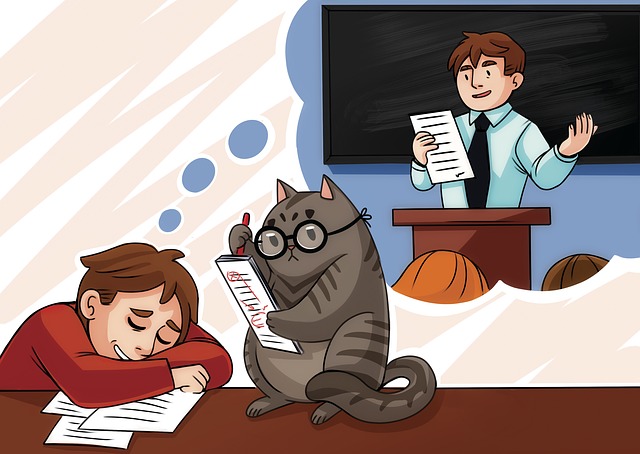
It was January of1940and I was fresh out of graduate school starting my first semester at the University of Kansas City. Part of the student body was a beanpole with hair on top who came into my class, sat down, folded his arms,and looked at me as if to say"All right, teach me something.
"Two weeks later we started Hamlet. Three weeks later he came into my office with his hands on his hips."Look,"he said,"I came here to be a pharmacist.Why do I have to read this stuff?"And not having a book of his own to point to, he pointed to mine which was lying on the desk.
New as I was to the faculty, I could have told this specimen a number of things. I could have pointed out that he had enrolled,not in a drugstore-mechanics school, but in a college and that at the end of his course he meant to reach for a scroll that would read Bachelor of Science.
It would not read: Qualified Pill-Grinding Technician.It would certify that he had specialized in pharmacy, but it would further certify that he had been exposed to some of the ideas mankind has generated within its history.That is to say, he had not entered a technical training school but a university and in universities students enroll for both training and education.
I could have told him all this, but it was fairly obvious he wasn't going to be around long enough for it to matter.
Nevertheless, I was young and I had a high sense of duty and I tried to put it this way: "For the rest of your life," I said, "your days are going to average out to about twenty-four hours.
They will be a little shorter when you are in love, and a little longer when you are out of love, but the average will tend to hold. For eight of these hours, more or less, you will be asleep."
"Then for about eight hours of each working day you will, I hope, be usefully employed.Assume you have gone through pharmacy school—or engineering, or law school, or whatever—during those eight hours you will be using your professional skills.You will see to it that the cyanide stays out of the aspirin.
That the bull doesn't jump the fence, or that your client doesn't go to the electric chair as a result of your incompetence.These are all useful pursuits. They involve skills every man must respect, and they can all bring you basic satisfactions.
Along with everything else, they will probably be what puts food on your table, supports your wife, and rears your children. They will be your income, and may it always suffice.
"But having finished the day's work, what do you do with those other eight hours? Let's say you go home to your family.What sort of family are you raising? Will the children ever be exposed to a reasonably penetrating idea at home?
Will you be presiding over a family that maintains some contact with the great democratic intellect?Will there be a book in the house? Will there be a painting a reasonably sensitive man can look at without shuddering? Will the kids ever get to hear Bach"?
That is about what I said, but this particular pest was not interested."Look," he said, "you professors raise your kids your way; I'll take care of my own. Me, I'm out to make money."
"I hope you make a lot of it," I told him, "because you're going to be badly stuck for something to do when you're not signing checks."
Fourteen years later I am still teaching, and I am here to tell you that the business of the college is not only to train you, but to put you in touch with what the best human minds have thought.If you have no time for Shakespeare, for a basic look at philosophy, for the continuity of the fine arts.
For that lesson of man's development we call history—then you have no business being in college.You are on your way to being that new species of mechanized savage, the push-button Neanderthal.Our colleges inevitably graduate a number of such life forms.
But it cannot be said that they went to college; rather the college went through them—without making contact.
No one gets to be a human being unaided. There is not time enough in a single lifetime to invent for oneself everything one needs to know in order to be a civilized human.
Assume, for example, that you want to be a physicist. You pass the great stone halls of, say, M.I.T., and there cut into the stone are the names of the scientists. The chances are that few if any of you will leave your names to be cut into those stones.
Yet any of you who managed to stay awake through part of a high school course in physics, knows more about physics than did many of those great scholars of the past. You know more because they left you what they knew, because you can start from what the past learned for you.
And as this is true of the techniques of mankind, so it is true of mankind's spiritual resources. Most of these resources, both technical and spiritual, are stored in books. Books are man's peculiar accomplishment. When you have read a book, you have added to your human experience.
Read Homer and your mind includes a piece of Homer's mind. Through books you can acquire at least fragments of the mind and experience of Virgil, Dante, Shakespeare—the list is endless. For a great book is necessarily a gift; it offers you a life you have not the time to live yourself.
And it takes you into a world you have not the time to travel in literal time. A civilized mind is, in essence, one that contains many such lives and many such worlds.If you are too much in a hurry, or too arrogantly proud of your own limitations, to accept as a gift to your humanity some pieces of the minds of Aristotle, or Chaucer or Einstein, you are neither a developed human nor a useful citizen of a democracy.
I think it was La Rochefoucauld who said that most people would never fall in love if they hadn't read about it. He might have said that no one would ever manage to become human if they hadn't read about it.
I speak, I'm sure, for the faculty of the liberal arts college and for the faculties of the specialized schools as well, when I say that a university has no real existence and no real purpose except as it succeeds in putting you in touch, both as specialists and as humans, with those human minds your human mind needs to include.
The faculty, by its very existence, says implicitly: "We have been aided by many people, and by many books, in our attempt to make ourselves some sort of storehouse of human experience.
We are here to make available to you, as best we can, that expertise.
又一学年——为了什么?
约翰•查尔迪
让我给你们讲讲我在教学生涯中最早遇到的困难。
课文翻译如下 第一单元
我最初听到这个故事是在印度,那儿的人们今天讲起它来仍好像实有其事似的——尽管任何一位博物学家都知道这不可能是真的。后来有人告诉我,在第一次世界大战之后不久就出现在一本杂志上。但登在杂志上的那篇故事, 以及写那篇故事的人,我却一直未能找到。故事发生在印度。某殖民官员和他的夫人举行盛行的晚宴。跟他们一起就座的客人有——军官和他人的夫人,另外还有一位来访的美国博物学家——筵席设在他们家宽敞的餐室里,室内大理石地板上没有铺地毯;屋顶明椽裸露;宽大的玻璃门外便是阳台。席间,一位年轻的女士同一位少校展开了热烈的讨论。年轻的女士认为,妇女已经有所进步,不再像过去那样一见到老鼠就吓得跳到椅子上;少校则不以为然。“女人一遇到危急情况,”少校说,反应便是尖叫。而男人虽然也可能想叫,但比起女人来,自制力却略胜一筹。这多出来的一点自制力正是真正起作用的东西。”那个美国人没有参加这场争论,他只是注视着在座的其他客人。在他这样观察时,他发现女主人的脸上显出一种奇异的表情。她两眼盯着正前方,脸部肌肉在微微抽搐。她向站在座椅后面的印度男仆做了个手势,对他耳语了几句。男仆两眼睁得大大的,迅速地离开了餐室。
本文介绍了贝茜小姐的虽然其貌不扬,但是学识渊博,很有才华。她教我很多的知识,带我读《贝奥武夫》,但是我觉得晦涩难懂,读不下去,她鼓励我帮我树立信心,并在班级赢得了同学的尊重。文章还着重介绍贝茜的家庭背景和学习背景,并且读了许多著名的文学作品。
She was only about five feet tall and probably never weighed more than 110 pounds, but Miss Bessie was a towering presence in the classroom. She was the only woman tough enough to make me read Beowulf and think for a few foolish days that I liked it. From 1938 to 1942, when I attended Bernard High School in McMinnville, Tenn.,she taught me English, history, civics—and a lot more than I realized.
I shall never forget the day she scolded me into reading Beowulf.
以上就是大学现代英语精读2的全部内容,本教材有以下特点: 1. 本教材是北京外国语大学英语系的一项重要科研成果,汇集了英语教学专家们的丰富教学经验,体现了前沿的教学思想。 2. 教材吸纳了国外最新的语言材料,题材丰富,内容新颖,包括了现代生活的各个方面,具有鲜明的时代特征。 3. 教材在总体目标、语言项目、。