游戏规则英文?ROTG是”Rules Of The Game”的简称,直译为“游戏规则”。英文含义:ROTG在英语中代表“Rules Of The Game”,即游戏规则,这是一个常见的缩写形式。中文对应:ROTG的中文拼音对应为“yóu xì guī zé”,即游戏规则。应用领域:ROTG在多个领域有广泛应用,特别是在影视领域,那么,游戏规则英文?一起来了解一下吧。
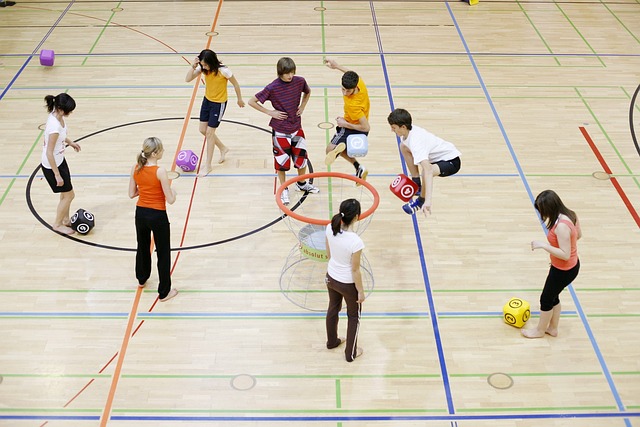
萝卜蹲游戏规则 “Carrot squat”game rules
Each student represents a kind of vegetable, cartoon character or animal. In the beginning, chose one student(apple e.g. ) by “paper, scissors,stone”. The first player start to say the game password:"apple down,apple down,apple down then banana down” while squat and up. Then it is banana’s turn to speak the game password and squat. Anyone fail to follow the password will be given out.The last winner gets the rewards.
每个学生代表一种动物,蔬菜或者卡通人物,首先由剪刀石头布决定第一个喊口令的学生,比如第一轮选到apple,代表apple的学生就就喊口令,"apple down,apple down,apple down then banana down"并做蹲的动作,接下来由banana做同样的动作并指定下一个蹲的学生。
USGA 高尔夫基本规则
(节录前 28 条,完整内容请自行查看以下网址。
http://www.usga.org/playing/rules/books/index.html)
The Rules of Golf (Basic rules for the game)
By PGA.com staff 02.26.2003 01:54 pm (ET)
Rule 1 -- The Game
The holes on the course must be played in order (l through 9, 10 through 18 or 1 through 18).
You must always play by the Rules. You are not allowed to change them.
Rule 2 -- Match Play
In match play, each hole is a separate contest. If you win the first hole, you are "one-up"; if you lose it, you are "one-down"; if you tie it, you are "all-square."
You have won the match when, for example, you are three-up and there are only two holes left to play.
Anyone you are playing against is your "opponent."
Rule 3 -- Stroke Play
In stroke play, the competitor with the lowest total score for the round (9 or 18 holes) is the winner.
You must play the ball into the hole before starting the next hole.
Anyone you are playing with is a fellow-competitor.
Rules 4 & 5 -- Clubs and the Ball
You may carry no more than fourteen clubs.
Normally, you may not change balls during the play of a hole. However, if you damage or cut your ball, you may change the ball after first asking your opponent or fellow competitor.
Rule 6 -- Things a Player Should Do
Read the notices given to you by the tournament officials.
Always use your proper handicap.
Know your tee-time or starting time.
Make sure you play your own ball (put a mark on the ball in case someone else is using an identical ball.
In stroke play, make sure your score for each hole is correct before you turn in your card.
Keep playing unless there is lightning, you are ill or an official tells you to stop.
Rule 7 -- Practice
You may not hit a practice shot while playing a hole, or from any hazard.
Note: Always read the local rules about practice.
Rule 8 -- Advice on How to Play
During a round, you may not ask anyone except your caddie or partner for advice on how to play. However, you may ask about Rules or the position of hazards or the flagstick.
You may not give advice to your opponent or fellow-competitor
Rule 9 -- Advising Opponent on Strokes Taken
In match play, you must tell your opponent the number of strokes you have taken if you are asked.
Rule 10 -- When to Play a Shot
The player who has the lowest score on a hole has the right to play his/her ball first on the next hole. This is called the "honor."
While playing a hole, the player whose ball is farthest from the hole plays first.
In match play, if you play out of turn, your opponent may make you replay your shot. This is not so in stroke play.
Rule 11 -- Teeing Ground
Tee your ball between the tee-markers or a little behind them. You may tee your ball as far as two club lengths behind the markers.
If your ball accidentally falls off the tee, you may replace it without penalty.
Rule 12 -- Finding Ball in Hazard -- Identifying Ball
A hazard is any bunker (area of sand) or water hazard (lake, pond, creek, etc).
In a bunker or water hazard, if sand or leaves cover your ball, you may remove enough of the sand or leaves to be able to see a part of the ball.
You may lift your ball to identify it anywhere except in a hazard. You must tell your opponent or fellow competitor before you lift your ball to identify it.
Rule 13 -- Playing the Ball as it Lies on the Course
You must play the ball as it lies. You may not move it to a better spot.
You may not improve your lie by pressing down behind the ball. The club may be grounded only lightly behind the ball.
You may not improve the area of your intended swing or line of play by bending or breaking anything growing, such as tree limbs or weeds.
In a hazard, you may not touch the sand, ground or water with the club before or during your back swing.
In a hazard, you may not remove loose impediments (natural things such as leaves or twigs) but you may remove obstructions (artificial objects such as bottles or rakes.)
Rule 14 -- Striking the Ball
You must strike the ball fairly with the head of the club. You may not push, scrape or rake the ball.
You must not hit your ball while it is moving.
Rule 15 -- Playing a Wrong Ball
In match play, if you play a ball that is not yours, you lose the hole. If you play the wrong ball in a hazard, there is no penalty and you must then play the right ball.
In stroke play, if you play a ball that is not yours, you must take a two-stroke penalty. If you play the wrong ball in a hazard, you must then play out the hole with your own ball. If you do not do so, you are disqualified.
Rule 16 -- The Putting Green
If any part of your ball is touching the green, it is on the green.
When your ball is on the green, you may brush away leaves and other loose impediments within your line of putt with your hand or a club. Do not fan them with a cap or towel.
You should repair ball marks or old hole plugs if they are within your line of putt, but you may not repair marks made by spikes or shoes.
You may not test the surface of the green by rolling a ball or scraping the surface.
Always mark your ball by putting a small coin or other marker behind it when you want to pick it up to clean or get it out of another player's way.
Rule 17 -- The Flagstick
If your ball is off the green, there is no penalty if you play and your ball strikes the flagstick, provided no one is holding the flagstick.
If your ball is on the green, do not putt with the flagstick in the hole. Either take the flagstick out or ask another player to hold it and take it out when you play your ball. In match play, if you putt and your ball hits the flagstick when it is in the hole, you lose the hole. In stroke play, you must add two penalty strokes to your score for the hole.
Rule 18 -- Moving the Ball
If you or your partner move either of your balls on purpose or accidentally, add a penalty stroke to your score, replace and play it.
If someone or something moves your ball other than you or your partner, (an outside agency) there is no penalty, but you must replace it. If the ball is moved by wind or water, you must play it as it lies.
Once you address the ball, if the ball moves, add a penalty stroke and replace the ball.
If you move a loose impediment lying within one club-length of the ball and the ball moves, add a penalty stroke, replace it and play it. On the putting green, there is no penalty.
Rule 19 -- Ball in Motion Deflected or Stopped
If your ball hits an outside agency, (bird, rake, etc.), it is called a "rub of the green." There is no penalty and the ball is played as it lies.
"Rub of the green." Play the ball as it lies. No penalty.
Hits you, partner, caddie or equipment, you lose the hole. In stroke play, incur a two-stroke penalty.
Hits your opponent, caddie or equipment, you may replay the shot.
Hit fellow competitor, caddie or equipment, no penalty.
If your ball hits you, your partner, your caddie, or your equipment in match play you lose the hole. In stroke play, you are penalized two strokes and you must play your ball as it lies.
If your ball hits your opponent, his caddie, or his equipment, there is no penalty; you may play the ball as it lies or replay the shot.
If your ball hits a fellow competitor, caddie or equipment in stroke play, there is no penalty and the ball is played as it lies. These are the same as outside agencies in stroke play.
If your ball hits another ball and moves it, you must play your ball as it lies. The owner of the other ball must replace it. If your ball is on the green when you play and the ball, which your ball hits, is also on the green, you are penalized two strokes in stroke play. Otherwise, there is no penalty.
Rule 20 -- Lifting and Dropping the Ball
If you are going to lift your ball under a Rule and the Rule requires that the ball be replaced, you must put a ball-marker behind the ball before you lift it.
When you drop a ball, stand erect, hold your arm out straight and drop it.
If a dropped ball hits the ground and rolls into a hazard, out of a hazard, comes to rest more than two club-lengths from where it first struck a part of the course, nearer the hole or, if you are dropping away from an immovable obstruction or ground under repair, etc., back into the obstruction or ground under repair, you must re-drop. If the same thing happens when you re-drop, you must place the ball where it struck the ground when it was re-dropped.
Rule 21 -- Cleaning the Ball
You may clean your ball when you are allowed to lift it. On the green a ball may be cleaned when lifted except when it has been lifted to determine if it is unfit or for identification purposes because it interferes with play.
Rule 22 -- Ball Interfering with or Assisting Play
If another ball interferes with your swing or is in your line of putt, you may ask the owner of the ball to lift it.
If your ball is near the hole and might serve as a backstop for another player, you may lift your ball.
Rule 23 -- Loose Impediments
Loose impediments are natural objects that are not growing or fixed -- such as leaves, twigs, branches, worms and insects. You may remove a loose impediment except when your ball and the loose impediment lie in a bunker or water hazard. (Exception see Rule 12)
Rule 24 -- Obstructions
Obstructions are artificial or man-made objects. Bottles, tin cans, rakes, etc., are movable obstructions. Sprinkler heads, shelter houses, cart paths, etc., are Immovable obstructions.
Movable obstructions anywhere on the course may be removed. If the ball moves when moving an obstruction, it must be replaced without penalty.
You may drop your ball away from an immovable obstruction if it interferes with your swing or stance. Find the nearest point not nearer the hole where you can play without interference with your swing or stance. Drop the ball within one club-length of that point. (You may move your ball away from an immovable obstruction if it interferes with your swing or stance.) Note: You should not pick up the ball from an obstruction until you have established the nearest point of relief.
Rule 25 -- Casual Water; Ground Under Repair; Animal Holes
Casual water is any temporary puddle of water caused by rain or over watering. Ground under repair is any damaged area, which the Committee has marked as such.
If your ball or your stance is in casual water, ground under repair or a burrowing animal hole, you may either play the ball as it lies or find the nearest place not nearer the hole which gives you relief, and drop the ball within one club-length of that place.
If your ball is in casual water, etc., and you cannot find it, determine where the ball entered the area and drop a ball within one club-length of that place without penalty.
If your ball is on the wrong green, find the nearest place off the green, which is not nearer the hole, and drop the ball within one club-length of that place.
Rule 26 -- Water Hazards
Water hazard margins are identified by yellow stakes or lines. Lateral water hazard margins are identified by red stakes or lines.
If your ball is in a water hazard or a lateral water hazard, you may play it as it lies. If you cannot find it or do not wish to play it, add a penalty stroke and drop and play another ball from where you last played; or drop a ball behind the water hazard as far back as you wish. If you decide to drop behind the hazard, drop the ball so that there is a straight line between the hole, where your ball last crossed the hazard margin and where you drop the ball. If your ball is in a lateral water hazard, you may drop a ball within two club-lengths of where the ball last crossed the hazard margin, no nearer to the hole.
Rule 27 -- Ball Lost or Out of Bounds
A ball is lost if it is not found within five minutes after you first begin to search.
A ball is out of bounds when all of it lies beyond the inside line of objects such as white stakes, or a fence or wall that marks the playing area.
If your ball is lost or out of bounds, you must add a penalty stroke to your score and play another ball from where you played your last shot.
If you think your ball may be lost or out of bounds, you may play another ball (provisional ball) from the place where your first ball was played. You must tell your opponent or fellow-competitor that you are playing a provisional ball and play it before you look for the first ball. If you cannot find your first ball or if it is out of bounds, you must count the strokes with the first and provisional balls, add a penalty stroke and play out the hole with the provisional ball. If you find your first ball in bounds, continue play with it and pick up the provisional ball.
Rule 28 -- Ball Unplayable
If your ball is under a tree or in some other bad situation and you decide you cannot play it, add a penalty stroke and do one of the following:
-1. Go back to where you played the last shot and play a ball from there
-2. Measure two club-lengths from the unplayable lie, drop a ball and play from there
-3. Keep the unplayable lie between where you drop the ball and the hole, go back as far as you wish on a straight line and drop and play the ball.

Anyword英语拼字游戏的玩法有很多种,难易有度,根据玩家的情况制定DIY的玩法。
下面介绍比较典型的大众玩法规则。
“十字”型CROSSWORD游戏规则(大众玩法)
1. 拼字时间
使用所有个立体字母方块;
60秒内拼字组合2个字母以上任何词性的单词,每局游戏时间为30分种或将方块拿完时自然结束游戏.
2. 拿方块的方法
每次拼字准备7个立体方块,每拼出单词计算得分,然后从布袋中拿相应数量的方块以凑够7个方块,准备下一轮拼字,当手中的10个方块拼不出任何单词时可再拿1个方块,但手中已够15个方块时不可以继续再拿方块.(7+1方式)
3. 拼字方向
以游戏盘方向为基准,“从左到右,从上到下”的方向拼单词,庄家必须先以【P】点开始或以【P】点结束来拼字单词,下一位玩家结合庄家拼的第一个单词的任何字母,以开头、经过、结尾的方式接龙拼单词.依此类推,每位玩家按此种接龙方式继续进行拼字。
得分规则
4. 拼成单词后新放置的每个方块都可以得基本分“+1分”
5. 拼成单词后相同颜色的方块邻接时,该颜色相邻接的方块都可以得奖励分“+1分”
6. 拼成单词后相同号的方块邻接时,该号码相邻接的方块都可以得奖励分“+1分”
7. 拼成单词后游戏盘底颜色和方块颜色相同时该颜色的方块可以得奖励分“+1分”
8. 拼成单词后游戏盘底数字和方块号码相同时该号码的方块可以得奖励分“+1分”
9. 单词长度多于5个字母时,第六个字母开始的每个方块得奖励分\"+1分\"
罚分规则
10. 游戏结束时玩家手中剩余的方块数量 X \"+3分\"作为下一位(对方)玩家的得分.
简单游戏规则流程:
※:简单流程:2个字母以上的任何单词> 使用所有立体方块> 7+1个字母方块开始拼字> 左右,上下方向拼字.
※:得分计算:每个方块基本分> 方块颜色、号码邻接奖励分> 游戏盘颜色、数字相同的方块得奖励分> 5个以上字母的单词奖励分.
----------------------------------------------------------------------
爱拼才会赢,我能拼!
Anyword英语拼字游戏对提高英语学习兴趣及增进英语词汇量具有卓越效果的益智思维游戏棋。
“游戏”的英文是“game”。它的英式读法是[ɡe_m];美式读法是[ɡe_m]。
“游戏”作名词意思有游戏;运动会;比赛;一场比赛;比赛得分;猎物;花招。作动词意思是赌博。作形容词意思有勇敢的;乐意的。
游戏的短语搭配:
Game Change:规则改变;游戏改变;迎接变革;
New Game:新游戏;开始新游戏;是开始新游戏;新建;
Electronic Game:电子游戏;电子游戏机;电动玩具;
ultimatum game:最后通牒赛局;最后通牒博弈;最后通牒游戏;最后通牒博弈实验;
stochastic game:随机博弈;[数]随机对策;机遇性赛局;随机赛局;
home game:主场比赛;主场;主场角逐;主场竞赛;
browser game:网页游戏;器游戏;浏览器游戏;
game semantics:博弈语义;
stealth game:隐蔽类游戏。
经典英语Bingo(宾果)是一种游戏,通常用于教授英语词汇和语言技能。
游戏设有一个方形的网格,在每个网格中填写了不同的英语单词或短语。游戏开始时,游戏主持人会随机地念出一个单词或短语,玩家需要在自己的Bingo卡上找到相应的单词并标记。玩家可以在水平、垂直或对角线的线上标记出连续的单词,当玩家成功标记出一个完整的线时,就可以宣布获胜并大声喊出“Bingo”。
经典英语Bingo是一种有趣的互动游戏,可以帮助玩家扩展词汇量、提高听力和集中注意力。它可以用于学校的英语课堂、语言学习中心或者家庭教育中,既可以适用于初学者,也可以用于高级学习者以巩固已学习的单词和短语。
Bingo游戏是一种受欢迎的机会游戏,玩家需要在随机选号的过程中将数字在卡片上标注。玩家通常会得到一个预先印刷的卡片,上面有一组数字网格,然后根据游戏操作者宣布的数字标注。游戏的目标是成为第一个完成预定模式的玩家,比如直线、对角线或完成整个卡片(称为"Bingo")。一旦玩家完成所需的模式,他们会大声喊出"Bingo!"来宣布胜利。Bingo游戏通常在社区中心、退休院所和在线平台等地作为社交活动进行。
以上就是游戏规则英文的全部内容,规则的英语为rule。短语搭配:1、the rules of the game游戏规则;大家共同遵守的行为标准。2、a rule of thumb实用的估算方法, 经验工作法(常依据经验而非准确测量)。3、play by the rules处事公正诚实,循规蹈矩,按部就班,按规矩办事。4、work to rule故意死扣规章而减低生产效率,变相怠工。内容来源于互联网,信息真伪需自行辨别。如有侵权请联系删除。